TTP Threatens PoK and Indian Options for National Security?
28/12/2025
By Fatima Baloch
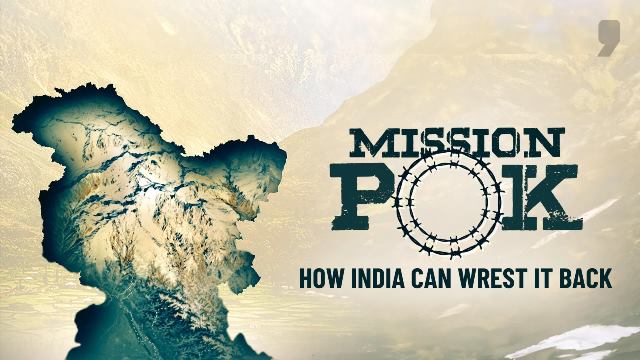
On 24 December 2025 Tehrik-e-Taliban Pakistan (TTP) announced its organizational structure across Pakistan, which also extends into Pakistan-occupied Kashmir (PoK) including Gilgit-Baltistan, where Pakistani armed forces are expected to face ambushes and military bases are likely to be attacked in the near future. In this structure TTP declared the establishment of an Air Force unit under the supervision of Salim Haqqani, which will employ sophisticated portable drones to target Pakistan’s key military bases, installations, and military-run industries. TTP has already formed a shadow government and military leadership across Pakistan with governors and commanders actively leading its insurgency. In Khyber Pakhtunkhwa the group has been using small drones for military operations targeting checkpoints, police, and law enforcement agencies, and now for the first time it has declared Kashmir as a new “Vilayat,” dividing Gilgit into two subdivisions: Vilayat Diamer and Vilayat Darel. The presence of such extremist groups in PoK, which is legally part of the Indian Union, poses a serious security threat to India as TTP adheres to an anti-India jihadi ideology. TTP has previously conducted operations in PoK, such as the attack on 28 August 2025 against a Gilgit-Baltistan Scouts check post in Hudur, Chilas, Diamer, which killed two soldiers and injured one, and according to its new structure TTP intends to strengthen its military presence in PoK.
In the context of current Afghan-Pakistan tensions, including continued TTP attacks and the October 14–15, 2025 Afghan-Pakistan war, it is evident that Pakistan’s army, despite backing from China, Turkey, and several Arab countries, is embroiled in brutal insurgencies in Occupied Balochistan and Khyber Pakhtunkhwa and is losing ground in a two-front war, with the possibility of collapse looming. This internal conflict will inevitably affect India’s national security. During preparations for Operation Sindhoor 1.0 in response to the Pahalgam attack on 22 April 2025, fighters of the Balochistan Liberation Army (BLA) and associated groups intensified their insurgency, ambushing Pakistani forces across Balochistan in solidarity with India. Following the Indo-Pakistan War of May 2025 Pakistan labeled the Baloch struggle as “Fitnatul-Hindustan,” accusing India of orchestrating it, yet the Baloch resistance has existed independently since Pakistan’s occupation of Balochistan in March 1948. History shows that when India supports liberation movements new nations can emerge, as in 1971 when India helped Bangladesh achieve independence despite global opposition. Today India must adopt a more assertive stance toward the Baloch cause not only for moral reasons but also to safeguard its own strategic interests.
In Pakistan-occupied Balochistan a secular nationalist armed struggle has endured despite repeated Pakistani military campaigns, while in Khyber Pakhtunkhwa TTP controls large territories, openly fighting the Pakistan Army and attempting to impose Taliban-style Sharia law. If Pakistan’s army collapses against TTP, India faces the risk of extremist expansion into PoK and the possibility of being trapped in a grueling guerrilla war that would ultimately lead to catastrophic results for Indian national security. Pakistan’s military, backed by Saudi Arabia, Qatar, UAE, Turkey, and China, continues its brutal suppression of Baloch nationalism, weaponizing religion, denying cultural rights, empowering feudal elites, and exploiting Balochistan’s natural resources for Punjab’s benefit. Pakistan has dragged China and these countries into supporting its occupation in Balochistan, campaign of repression, fueling anti-China sentiment among the Baloch. Despite this, the Baloch struggle has evolved into a youth-led secular urban movement, with women playing a prominent role and leadership shifting to figures such as Dr. Mahrang Baloch, Bashir Zaib Baloch, and Dr. Allah Nazar. The Baloch Liberation Army now operates as a structured force with elite units like the Majeed Brigade, Fateh Squad, and an intelligence wing, Zirab. For the younger generation independence is not just an aspiration but seen as inevitable and a national dream.
Pakistan is spiraling into political, economic, and security collapse, with the rise of the BLA, BLF, and TTP pointing to a deepening crisis. India cannot remain a passive observer. Key questions arise about whether PoK’s Sufi and Shia communities will accept TTP’s radical vision of Sharia law, whether TTP can abandon its hostility toward India, whether India is prepared to counter these threats with clarity and resolve, and whether the secular Baloch nation should continue to suffer while India offers only symbolic support. A nuclear-armed Pakistan under TTP control would be catastrophic for South Asia and global stability, while an independent secular Balochistan could stabilize the region and serve as a strategic ally for India.
Strategic Options
India must recognize the Afghan Taliban government as Russia has done and coordinate with Kabul, prepare contingency plans to reclaim PoK before Pakistan’s collapse, engage secular Baloch nationalists—particularly BLA leadership—to support a free Balochistan, and encourage Afghanistan to absorb Khyber Pakhtunkhwa into a Greater Afghanistan. Such steps to disintegrate Pakistan would dismantle China’s CPEC corridor through PoK, secure India’s sovereignty, and grant direct access to Central Asia. India has historically raised the Baloch issue internationally, and now is the time to move from symbolic gestures to concrete action. Just as in 1971 India has both the moral obligation and strategic imperative to assist the Baloch in their struggle for self-determination.
Conclusion
The rise of TTP and the resilience of the Baloch struggle highlight Pakistan’s deepening internal crisis and the urgent need for India to act decisively. A collapsing Pakistan dominated by extremist forces would destabilize South Asia and threaten India’s sovereignty, while an independent secular Balochistan could serve as a stabilizing ally. India must therefore prepare for Pakistan’s potential disintegration by supporting Baloch aspirations, reclaiming PoK, and coordinating with Afghanistan to secure long-term regional stability. Such steps would secure stability for both India and Afghanistan. Notably, nationalist figures within the Afghan Taliban reportedly maintain cordial relations with Baloch freedom fighters. The Baloch are part of Afghanistan’s ethnic mosaic, with Nimroz being a Baloch-majority province that remained peaceful during the Soviet intervention, Afghan civil war, and U.S./NATO occupation. Afghan Baloch leadership consistently negotiated with Herat’s prominent Islamist commander Ismail to avoid internal conflict and resolve state matters amicably. As a result, civil war was avoided in August 2021 during the U.S. withdrawal. Today Afghan Baloch hold key positions in the Taliban’s political and military structures, and some are said to support Baloch nationalists seeking independence. Pakistan’s past interference has contributed to the serious security challenges it now faces. Historically, Baloch migrants and BLA freedom fighters from Pakistan-occupied Balochistan have remained neutral in Afghan politics and internal conflicts, earning respect and solidarity.
About the Author
Fatima Baloch is a senior geopolitical and regional expert who writes extensively on Afghanistan, Balochistan, and India, with a focus on strategic dynamics and regional security.
(Disclaimer: The views, observations and opinions expressed in above write up of KIP News are strictly author’s own. Kashmir Independent Press (kipnews.in) News does not take any onus or liability for the veracity, accuracy, validity, completeness, suitability of any of information in the above given write up. The information, facts or figures appearing in the write up in no way manifest the position, standpoint or stance of Kashmir Independent Press (kipnews.in) and the kipnews.in does not assume any encumbrance or answerability of the same. All disputes are subject to the exclusive jurisdiction of competent Courts and Forums in Jammu City Only.)
Editor
Kashmir Independent Press(kipnews.in)