UT Ladakh celebrates World Wildlife Day 2026 with a Seminar on Medicinal and Aromatic Plants
03/03/2026
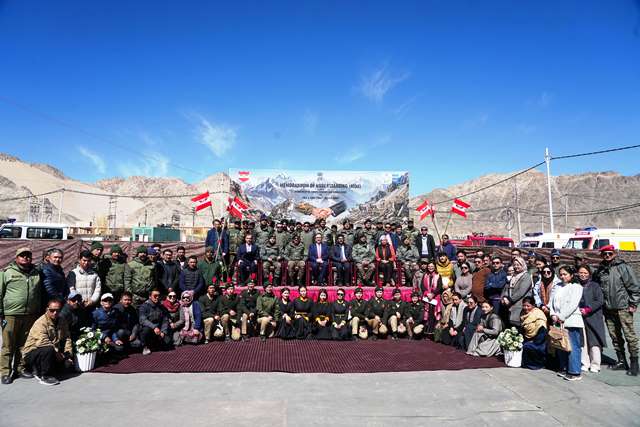
Leh, March 03 (KIP)-The Department of Forest, Ecology and Environment, Union Territory of Ladakh, in collaboration with the Fire and Fury Corps of the Indian Army, celebrated World Wildlife Day 2026 at the Rinchen Auditorium, Leh.
The event was organised under this year’s global theme, “Medicinal and Aromatic Plants: Conserving Health, Heritage and Livelihoods,” highlighting the vital role of biodiversity in sustaining traditional knowledge systems and local economies.
The programme was graced by Ashish Kundra, Chief Secretary, UT Ladakh, who attended the event as the Chief Guest.
In his inaugural address, the Chief Secretary emphasised that Ladakh’s rich biodiversity stands as a testament to the harmonious relationship between its people and nature. He underlined the need to strike a careful balance between development and ecological preservation, particularly in fragile Himalayan ecosystems.
Acknowledging emerging challenges such as unregulated tourism, feral dog management, water scarcity, and waste disposal, he called for strengthened institutional partnerships, community participation, and sustainable tourism models. He also proposed exploring the possibility of hosting an international wildlife conference in Ladakh to promote collaborative conservation efforts and reaffirmed the administration’s commitment to protecting the region’s unique flora and fauna.
On the occasion, the Chief Secretary inaugurated an exhibition showcasing Ladakh’s “Big Seven” Schedule-I wildlife species, a Sowa Rigpa herbarium display of medicinal plants native to Ladakh, and eco-friendly felt products developed by the Snow Leopard Conservancy India Trust. A special postal cancellation was released in association with the Department of Posts, and a toll-free wildlife helpline number was formally launched to strengthen public engagement in conservation initiatives.
Shri Rajesh S., IFS, Additional Principal Chief Conservator of Forests and Chief Wildlife Warden, UT Ladakh, addressed the gathering as Guest of Honour and described the celebration as a significant milestone in Ladakh’s conservation journey. He highlighted the discovery of a new bird record for the Union Territory and stressed the importance of safeguarding the Trans-Himalayan ecosystem amid the impacts of climate change, glacial retreat, and shifting pastoral landscapes. He underscored the need for sustainable use of medicinal plants such as seabuckthorn and called for enhanced community involvement in conservation practices.
Lieutenant General Hitesh Bhalla, UYSM, SC, SM, VSM, General Officer Commanding-in-Chief of the Fire and Fury Corps, reaffirmed the Indian Army’s commitment to ecological stewardship in Ladakh. He highlighted ongoing initiatives including wildlife protection measures, anti-poaching support, sterilization drives for feral dogs, waste management collaboration and unified approach to biodiversity conservation.
A significant highlight of the event was the exchange of a Memorandum of Understanding between the Fire and Fury Corps and the UT Ladakh administration for collaborative snow leopard conservation efforts, marking a strengthened civil–military partnership for safeguarding the region’s fragile ecosystem.
During the programme, Shri Padma Gyalpo, Regional Coordinator of the AWC eBird Project, presented the first record for Ladakh and the second record for India of the bird species Lapland Longspur, documented during the Asian Waterbird Census conducted in collaboration with Wetlands International South Asia.
A special lecture was delivered by Dr. Sejal Worah, Programme Director of World Wide Fund for Nature India, who lauded the partnership between the Indian Army and the UT Administration as a model for the country. She elaborated on conservation challenges in the Himalayas, emphasizing the need to protect fragile mountain ecosystems, preserve traditional livelihoods, and incorporate local voices in policymaking.
The event also recognized exemplary contributions by community groups and wildlife officials, including Ama Tsogspa Hanupata for juniper protection and the Brown Bear Trust, Kargil, for dedicated conservation efforts.
Following the inaugural session, a comprehensive technical seminar was conducted focusing on medicinal and aromatic plants and their role in conserving health, heritage, and livelihoods.
Experts from the National Institute of Sowa Rigpa, the University of Ladakh, the Nature Conservation Foundation, and the Snow Leopard Conservancy India Trust deliberated on sustainable management of medicinal plants, pastoral livelihood systems, wild edible plants, and biodiversity conservation strategies.
The programme further included discussions on wildlife-friendly infrastructure planning, training for Army personnel on the PARIVESH Portal of the Ministry of Environment, Forest and Climate Change, and a review of conservation initiatives undertaken by Honorary Wildlife Wardens in UT Ladakh.
A dedicated workshop was conducted to sensitize Army personnel on key hotspots of endemic and rare species across Ladakh’s wildlife sanctuaries. The technical session concluded with closing remarks by the Additional Principal Chief Conservator of Forests and Chief Wildlife Warden, UT Ladakh, reaffirming the administration’s commitment to strengthening conservation efforts through collaboration, awareness, and sustainable practices.