Two-Day Trans-Himalayan Urban Climate Conclave Begins in Leh
10/04/2026
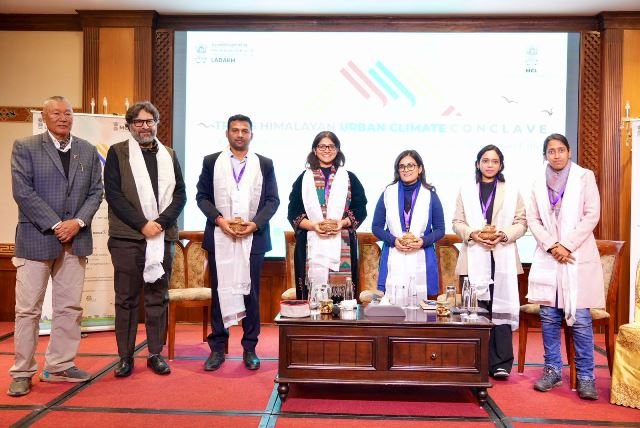
Leh, April 10 (KIP)-A two-day Trans-Himalayan Urban Climate Conclave, themed “Advancing Climate-Resilient and Net-Zero Pathways for Himalayan Cities,” commenced in Leh.
The conclave is being organised by the Housing and Urban Development Department (HUDD), UT Ladakh, in collaboration with Municipal Committee Leh, Ladakh Ecological Development Group (LEDeG), German Cooperation, and BORDA South Asia.
The conclave aims to enable Himalayan towns to build climate-resilient, finance-ready urban systems by focusing on tools such as MRV frameworks, carbon markets, and sustainable infrastructure solutions tailored to fragile mountain ecosystems.
The event was ceremonially inaugurated by dignitaries and began with a welcome address by Director, HUDD, UT Ladakh, Nitish Rajori (IAS), who highlighted Ladakh’s unique development challenges and opportunities. He emphasised the need for a holistic, sustainable, and livelihood-oriented development approach, noting that rapid urbanisation, increased tourism, and changing climate patterns are placing pressure on Ladakh’s natural resources, particularly water and energy systems.
In his keynote address, Secretary, Tourism Department, Sanjeet Rodrigues, underscored the importance of collaboration among policymakers, experts, and institutions to chart a sustainable pathway for Ladakh. He highlighted Ladakh’s potential in renewable energy, especially solar and wind, and stressed the need for people-centric, environmentally responsible development. He also outlined ongoing and planned initiatives in areas such as water management, sanitation, and sustainable urban infrastructure, while calling for continued knowledge sharing and technical support from partner organisations.
Speaking on the occasion, Secretary, Power Development Department, Rudra Goud P.T., emphasised the significance of achieving net-zero targets in Ladakh’s unique terrain. He noted the challenges posed by extreme climatic conditions, connectivity constraints, and seasonal variations, and stressed the importance of adopting renewable energy solutions, energy-efficient infrastructure, and climate-responsive building designs.
The conclave featured a series of technical sessions and expert interactions focusing on climate resilience, urban planning, and sustainable development in Himalayan regions. Experts discussed policy frameworks for enabling net-zero cities, challenges of infrastructure development in high-altitude areas, and the importance of locally adapted, decentralised solutions. Key themes included water scarcity, waste management, energy efficiency, and the need to integrate traditional knowledge with modern technologies.
A major focus of the conclave was on climate finance and carbon markets, exploring how cities can mobilise financial resources for sustainable urban development. Discussions highlighted the role of voluntary carbon markets, innovative financing mechanisms, and blended finance in supporting climate-resilient infrastructure in smaller and remote urban centres.
The conclave also included panel discussions on governance models for climate resilience, carbon market scaling, and urban climate finance, with participation from experts representing national and international organisations. The deliberations focused on identifying actionable strategies, strengthening institutional frameworks, and promoting innovation in climate action for mountain cities.
The event witnessed participation from senior officials of the UT Administration, representatives from academic and research institutions, international organisations, civil society groups, and domain experts from across the country and abroad.
Among those present were Secretary, Law and Justice, Tariq Mehmood Qureshi, representatives of religious and community organisations, including the All-Buddhist Association Leh, and other stakeholders.