Scaling Production and Strengthening Value Chains Lead Day 2 Discussions at Apricot Workshop in Leh
18/04/2026
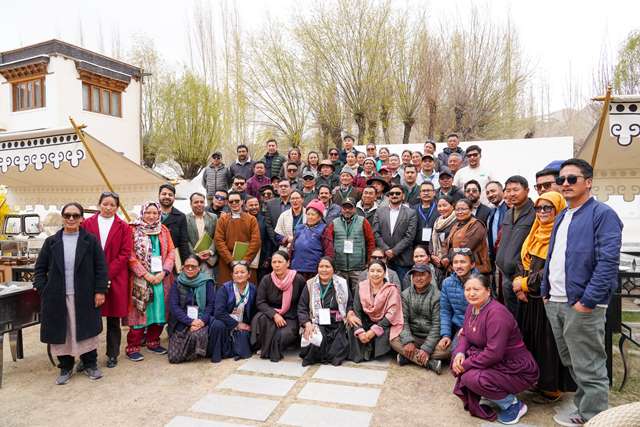
Leh, April 17 (KIP)- The two-day National Workshop on “Enhancing Apricot Cultivation and Value Chain in Ladakh: Knowledge Sharing, Challenges, and Collaboration” concluded successfully today with a strong emphasis on policy dialogue and the development of a strategic roadmap for the apricot sector in the Union Territory.
The second day commenced with a comprehensive recap of key insights and deliberations from Day 1, setting the stage for in-depth panel discussions focused on strengthening the apricot ecosystem in Ladakh.
The Chief Guest, Shri Ashish Kundra, in his address emphasized the importance of bringing all stakeholders onto a common platform to foster coordination and innovation. He appreciated the signing of MoUs and stressed the need for collective efforts in scaling production, strengthening FPOs, and improving infrastructure such as nurseries and cold storage facilities. He underscored that mission-mode implementation over the coming months can yield significant results and position Ladakh as a leading apricot-producing and exporting region.
The first panel discussion addressed the theme “Developing Apricot Processing Ecosystem,” focusing on building infrastructure and systems for apricot processing in the region. Moderated by Dr. Mehdi, Head of KVK Zanskar, the panel featured Dr. Ranjit Singh Spehia, Head of KVK Solan; Dr. Amit Nath, Head of Horticulture Crop Processing Division, CIPHET; Dr. Anand Kishor, Assistant Professor, Department of Food Engineering, NIFTEM; and entrepreneur Shri S. Karma Togdan.
The discussion highlighted the importance of appropriate packaging systems and materials in enhancing product value and marketability.
Panelists emphasized the need for modern processing facilities, including automatic processing units, improved drying technologies such as solar glasshouse dryers in villages, and adoption of organic preservation techniques. The role of innovation, experimentation, and knowledge exchange in strengthening the horticulture sector was also underscored.
Discussions also focused on the effective utilization of the Geographical Indication (GI) tag for Ladakh apricots. It was emphasized that registered and authorized users can benefit significantly from GI certification, provided proper packaging, branding, and compliance mechanisms are followed through the Horticulture Department.
The second panel discussion centered on “Scaling Apricot Production in Ladakh,” moderated by Shri Bhupesh Chaudhary, Secretary, Horticulture. The panel included Dr. Om Chand, Director ICAR-CITH; Dr. Shabber Hussain, SMS (Fruit Science), KVK Kargil; Shri Ishey Tundup, Executive Director, LEDeG; and Shri Ahmed Ali, Agriculture Engineer.
The discussion focused on achieving the Vision 2030 target of increasing apricot production to 15,800 tonnes. Panelists deliberated on strategies such as expanding the area under cultivation, promoting high-quality nurseries, adopting scientific planting techniques including close spacing, and addressing climate-related challenges affecting flowering and harvesting cycles. The importance of conducting an orchard census, improving farmer awareness, and strengthening extension services was highlighted. Issues such as climate change, erratic rainfall, urbanization, and pest management were also discussed, with emphasis on integrated and organic farming practices.
The panel further stressed the need for convergence of government schemes, effective utilization of subsidies, and capacity building through certified trainers. The importance of strengthening traditional orchard systems with modern scientific practices and enhancing community awareness at the village level was also emphasized.
Suggestions such as establishing oil extraction units, shared processing facilities, and improved infrastructure were discussed as key interventions.
The third panel discussion focused on “Branding and Export Strategy for Ladakh Apricots,” covering GI tagging, branding, and export market expansion. Moderated by Dr. Mansoor, Assistant Professor, KVK Kargil, the panel included Shri Ashraf Bhat from the Industries & Commerce Department, UT Ladakh; entrepreneur Shri Zakir Hussain from Kargil; Shri Tsewang Dorjey representing FPOs; and Shri Chotak Gyatso from the Leh Nutrition Project. Panelists highlighted that branding is essential to create demand, and GI tagging alone is insufficient without strong market positioning.
The need for developing demand-driven products, strengthening cold storage infrastructure, reducing post-harvest losses, and identifying reliable buyers for dried apricots was emphasized.
The importance of collective action through Farmer Producer Organizations (FPOs), establishment of processing units, and allocation of land for processing-cum-showroom facilities was also discussed.
Participants also raised the need for creating an apricot board, strengthening agricultural federations, and focusing on domestic demand, including supply to institutional buyers such as the armed forces, alongside export strategies.
The valedictory session summarized key recommendations from the workshop, including increasing production through scientific interventions, improving processing infrastructure, promoting organic certification, and enhancing export readiness. Shri Bhupesh Chaudhary, Secretary, Horticulture, in his address highlighted the collaborative efforts of scientists, farmers, entrepreneurs, FPOs, and government departments.
He noted that significant progress has been made in areas such as organic certification through PGS and NPOP systems, development of common facility centres, and strengthening value chains. He also highlighted achievements such as partnerships for export initiatives and the ongoing efforts to improve packaging, labelling, and compliance with food safety standards.